Owlchemy Labs details Hyper Visor's multi-physics-scene pause system in Unity
Owlchemy Labs explained on the Unity blog how Hyper Visor, an XR arcade game for Android XR devices, uses separate physics scenes and per-world clocks. The same approach handles gameplay, pausing and menus.
Digital Developer Desk, 10h ago, 4 min read
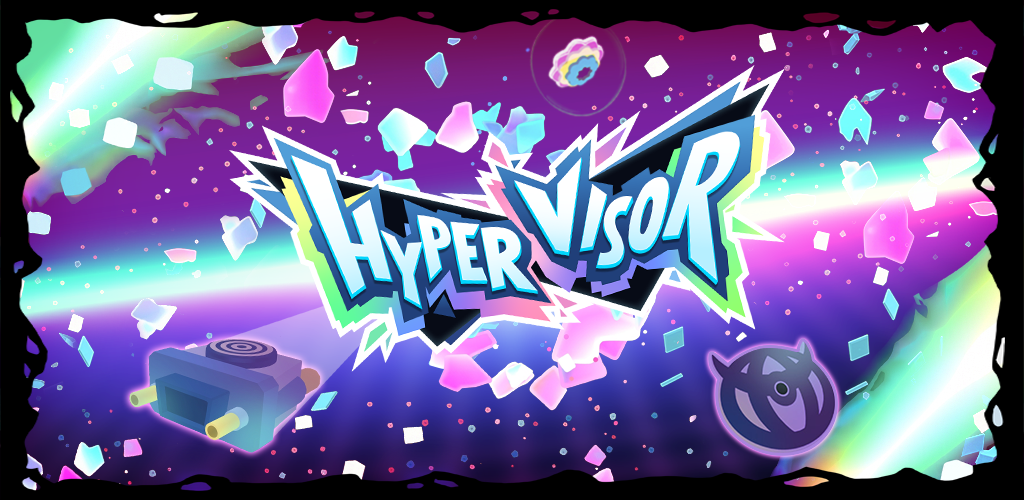
Owlchemy Labs has published a guest post on the Unity blog about Hyper Visor, an XR arcade experience built with Unity for Android XR devices. Principal systems engineer Bogdan Rybak and expert art generalist Brieyh'leai Simmons describe how they kept gameplay, pausing and menus inside one interaction model. The tools were multiple physics scenes and an energy stream the player aims with their hand.
Every interaction is physics-driven. Targets are Rigidbody objects that the player's beam sphere-casts against, and they serve as both gameplay and UI, so there is no separate UI system. Settings work like gameplay: the player powers each button's target with the stream, and a "life ring" mesh depletes like a progress bar. The team chose point-and-wait over pinching because pinching can be finicky with hand tracking. The beam's direction depends only on head and wrist position, not finger data, and a closed fist turns it off.
Each game world lives in its own physics scene with its own clock. Systems call _world.Spawn() instead of Instantiate() and ask their world for time. The world lookup maps gameObject.scene in Awake(), using the scene handle. A GameModule ticks the worlds in FixedUpdate(): it runs the main game-logic scripting system, then calls PhysicsScene.Simulate() on each world with that world's clock. The team also controls when Physics.SyncTransforms() is called. Time.timeScale is used only when the device's focus state changes. The player and anything grabbed stay in the main physics scene, which can't be paused except for menus or when the glasses come off. The beam casts against all active worlds. Physics scenes held around 100 Rigidbodies at a time, and app time on XREAL AURA was stable at around 7 ms, with physics a small part of it.
For iteration, the team avoided waiting on a recompile and domain reload, which could take up to 40 seconds. Levels are Prefabs rather than scenes, driven by a custom text-based level-scripting system of around 3,000 lines in total. Pressing "R" reloads the current level and preserves the current round, and values can be tuned at runtime and copied into Prefabs. The system evaluates all parent conditions, so loops exit on the exact frame a condition such as objective_met changes. The authors say C# hot reload wasn't the right fit, though complex boss scripts might benefit from a fuller programming language in future.
On the display side, XREAL AURA's additive display emits no light for dark pixels, so dark and desaturated visuals look transparent. The team used bright, saturated values for focal points and redid targets and the Hyper Visor Shades character after they looked too transparent. Most developers had a Meta Quest 3 rather than XREAL AURA, so the team used a URP Renderer Feature to crop internal Quest 3 builds to XREAL AURA's aspect ratio. Worlds are masked with the stencil buffer, each with its own stencil number, chosen for performance.
Owlchemy developed on Unity 6.2 and shipped on Unity 6.5 for XREAL AURA launch-day support. They maintain a framework on top of Unity's OpenXR plug-in that smooths out platform wrinkles and integrates with their build tool. Their advice: set clear design constraints early and lean into the device's constraints. Hyper Visor is available on Android XR devices.
Sources
Get the daily brief
The five stories that matter, every weekday morning. Free.
O3DE 26.10 moves Editor to Qt 6, adds experimental Apple Silicon and removes PhysX 4
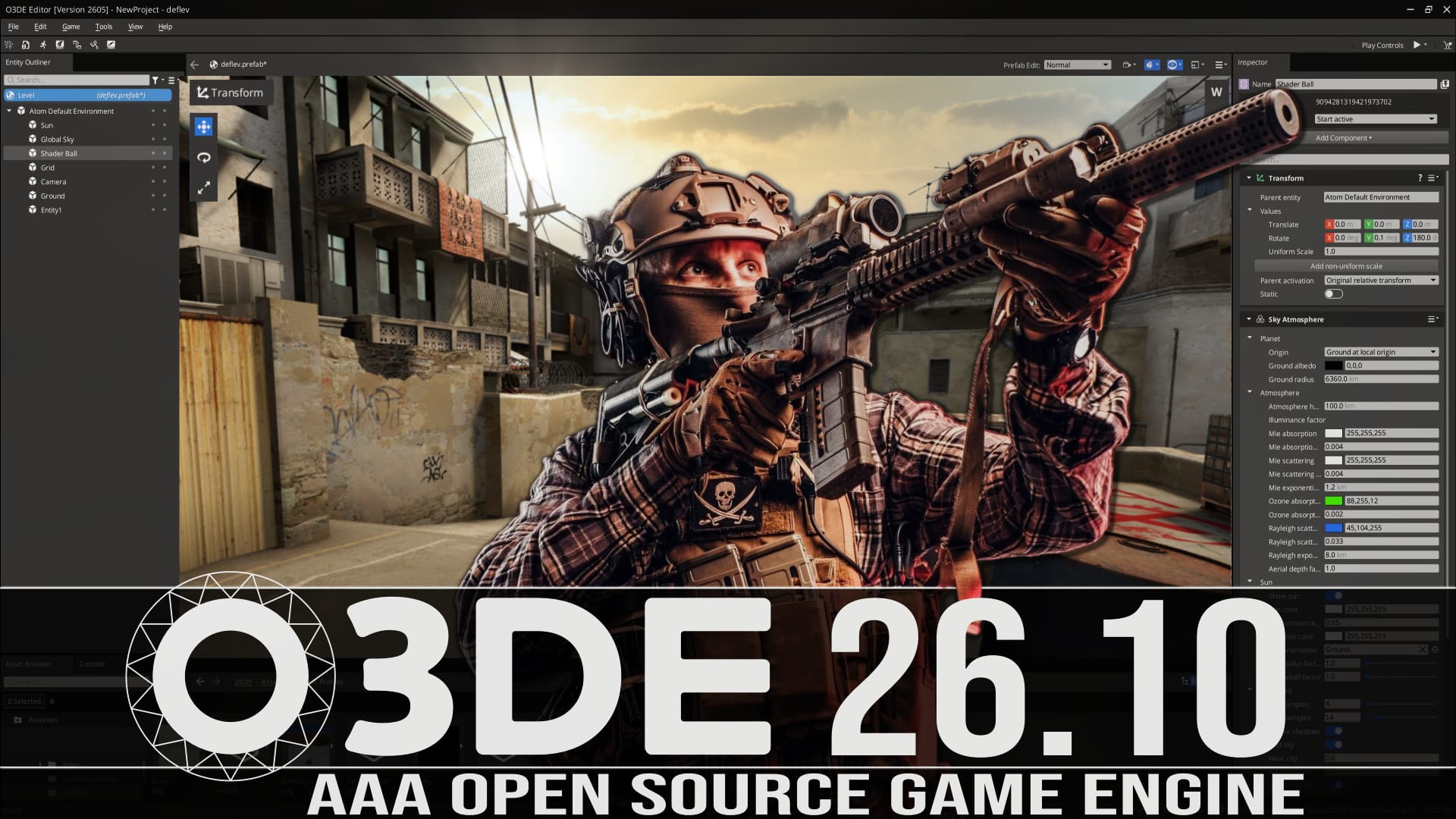
O3DE 26.10 has been released, with an Editor rebuilt on Qt 6.10.2, experimental native Mac ARM64 builds, GTAO and the final removal of PhysX 4. It also adds ROS 2 Lyrical Luth support and a cleaner, more standard core.
gamefromscratch.com10h ago3 min read
Epic drops Blueprints and Actor Gameplay Framework from Unreal Engine 6 plans
Epic has announced that Unreal Engine 6 will not support Blueprints or the Actor Gameplay Framework, reversing its June plan to keep both as options. Epic cites advances in AI for converting UE5 projects.
gamedeveloper.com10h ago2 min read

Control Resonant creative director talks dev decisions on Game Developer podcast
Game Developer's podcast this week features Control Resonant creative director Mikael Kasurinen discussing the difficult development decisions behind the game. Game Developer says the game sold over a million copies in two weeks.
gamedeveloper.com4d ago2 min read
