JangaFX IlluGen 2.0 adds GPU particles, fracture tools and a Niagara exporter
JangaFX's node-based real-time VFX authoring tool IlluGen has reached version 2.0, with GPU particle simulation, mesh fracture and pivot animation textures. The current build is 2.0.1, and a new exporter writes particle caches for Unreal Engine's Niagara.
Digital Developer Desk, 1h ago, 4 min read
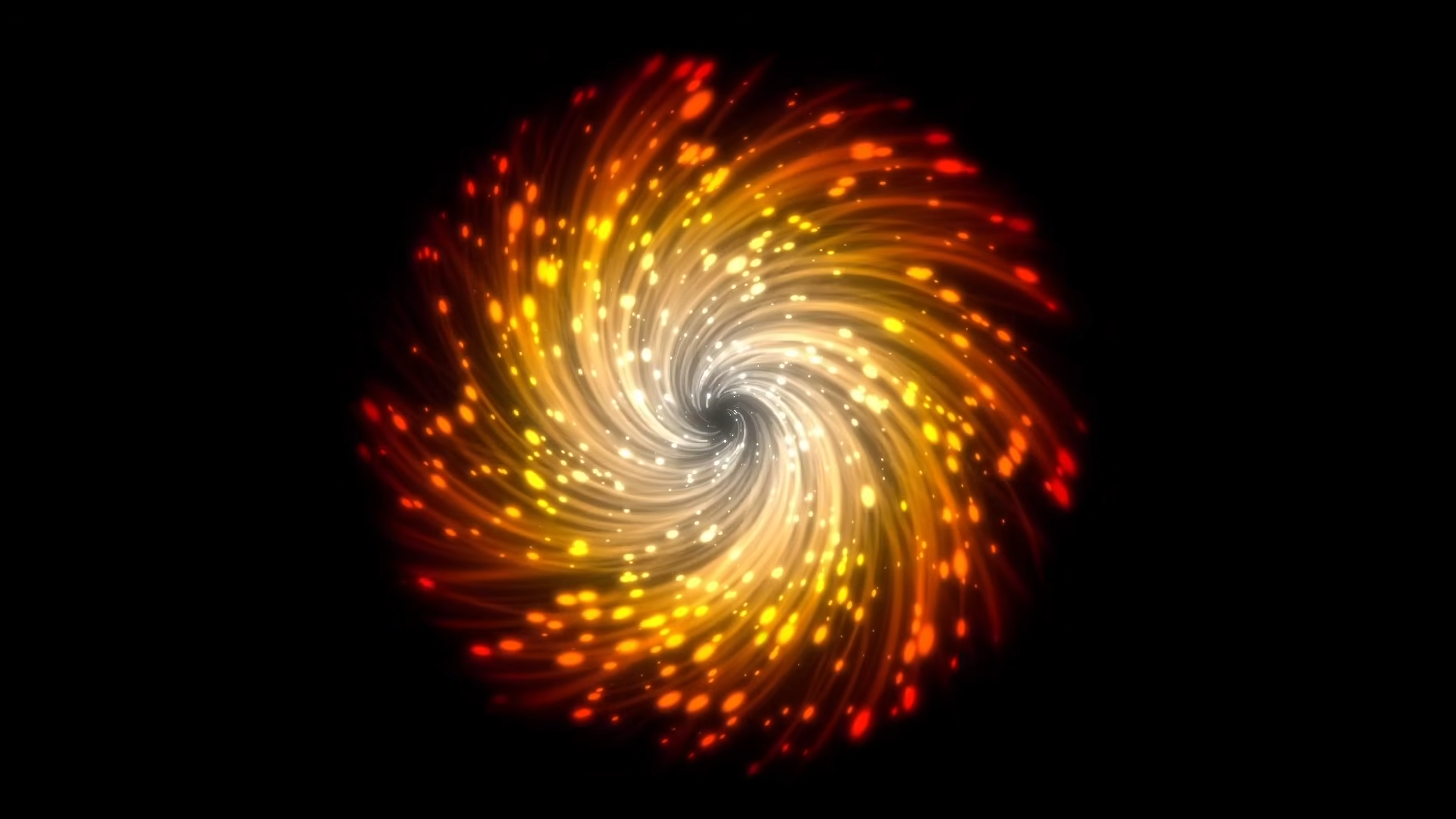
IlluGen 2.0 gives JangaFX's node-based authoring tool a GPU particle system. Particle: System runs in 2D or 3D and feeds both texture authoring and animated objects. Spawn, Forces, Interact and Modulation run in order, with physics integrated before Interact. Soft Relax separates overlaps, collisions bounce particles and Boids adds flocking. Trails, ribbons and accumulation turn particle paths into geometry or textures. Point Colliders uses spheres rather than mesh surfaces.
Geometry nodes now show their results directly in the graph. New tools include Booleans, Revolve and Fracture, which cuts a mesh around input points into solid pieces or surface shells. Solid cuts require closed meshes. Each piece has its own pivot, and particles can drive the pieces of any mesh with multiple pivots individually. Pivot animation textures (PAT) store rigid-piece movement and rotation instead of tracking every vertex as VAT does. JangaFX describes PAT as a lighter representation for rigid pieces, but its presentation gave no figure for the memory saving.
UV Flow has been rewritten with multigrid pressure, MacCormack advection, multiscale vorticity and selectable wrapping or blocking boundaries. It supports flowmap creation, fluid ripples and vortices, and extracted particle velocities can drive it. Cache/Recall feeds a downstream result back upstream. The camera system is reworked, with a free camera and an orbit camera, and the 3D viewport can be exported to a texture. Angle-weighted normals, transformed tangents and Merge's preserved shading can alter results in older graphs.
The new Niagara exporter writes .hjson and .hbjson particle caches. It relies on SideFX's Houdini Niagara plug-in, which reads .hjson as text JSON and .hbjson as binary JSON, the latter recommended for smaller files and faster imports. Both Niagara and Houdini Niagara must be enabled, and the plug-in build must match the engine version. Niagara's 32-bit indexing still limits combined point, frame and attribute data even though files over 2 GB are supported, and SideFX recommends splitting oversized caches. Grid-spawned particles can also act as probes for a vector field, with sampled velocities exported as FGA. PAT and vector fields can go to other engines with suitable import and playback setups.
Build 2.0.1 arrived on 16 October. Force types now compile smaller shaders separately, and wiring Multi Blend or Multi Switch inputs no longer triggers compilation. Curl Noise uses analytic gradients and four times fewer noise samples per particle. The build also adds shader progress reporting, Mac and Linux update notices and a launch-failure fix. IlluGen runs on Windows 10 or 11, Linux (RHEL 9 or later) and Apple Silicon macOS (Sequoia and Tahoe listed, 16 GB RAM). The baseline elsewhere is a quad-core 2.5 GHz CPU, 8 GB RAM and a GTX 1060 or RX 580 GPU.
Indie node-locked pricing is US$300 for a permanent licence with 12 months of updates, then optional US$180 annual maintenance. Rent-to-own is US$20 a month, permanent after 18 consecutive payments. Studio node-locked is US$1,600, with US$1,280 annual maintenance. Prices exclude taxes. Indie applies below US$1 million, Studio covers US$1 million to 100 million, and Enterprise uses custom terms above that. Maintenance auto-renewal is on by default for permanent purchases, with an opt-out at checkout. The 30-day trial includes all features and unlimited exports. General documentation is still being completed.
Sources
Get the daily brief
The five stories that matter, every weekday morning. Free.
AMD FSR SDK 2.4 brings FSR Upscaling 4.1 to RX 6000 GPUs, Ryzen APUs and Vulkan
AMD released FSR "Redstone" SDK 2.4, extending ML-based FSR Upscaling 4.1 to Radeon RX 6000 Series GPUs and select Ryzen processors with integrated graphics. It also adds Vulkan support at feature parity with DirectX 12 for upscaling and frame generation.
gpuopen.com6h ago3 min read
Unreal Engine 5.8: new features reportedly only for Movie Render Graph, not MRQ
A community post says Epic has stopped adding features to Movie Render Queue as of Unreal Engine 5.8, and that new work will go to Movie Render Graph only. The claim is unverified here, but teams that render with MRQ should check their pipelines.
reddit.com7h ago2 min read
Flax Engine 1.13 adds DDGI specular reflections, occlusion culling and .NET 10
Flax Engine 1.13 has been released with .NET 10 and C# 14, DDGI specular reflections, occlusion culling and split-screen rendering. Reversed Z depth is on by default, so existing projects should be checked after upgrading.
gamefromscratch.com7h ago3 min read