Everstone Studio details its DLSS 5 integration in Where Winds Meet
In a Q&A on the NVIDIA Technical Blog, Everstone Studio describes how it evaluated DLSS 5 in Where Winds Meet and says it adds performance overhead that developers should budget for early.
Digital Developer Desk, 10h ago, 3 min read

Everstone Studio says DLSS 5 improved the lighting and material look of Where Winds Meet in internal playtesting, but that enabling it adds performance overhead. In a Q&A published on the NVIDIA Technical Blog on 2026-11-24, art director Muzi Li and engine tech lead Cory Zhou describe how the team evaluated it. The studio plans to let players enable or disable DLSS 5.
The team describes DLSS 5 as building on the image the engine already produces, using neural rendering to enhance lighting and material details. In their account, it tones down overly bright highlights while bringing out more detail in those areas. It also fills in ambient-light details and subtle highlights in shadows, and recognizes material properties.
On integration, the studio says it has kept up with the latest DLSS technologies and its NVIDIA Streamline integration. That left its rendering pipeline with strong DLSS support, which it says made the move to DLSS 5 a natural extension of its roadmap and helped keep integration smooth.
Artists and engineers worked together on tuning. The studio says NVIDIA provides options for model selection and controls such as structural and tonal strength. The team checks whether characters stay recognizable, whether materials like fabric, leather and metal stay distinct, and whether lighting changes disrupt a scene's mood. If faces or the color palette drift from the intended look, they look for a different balance. The studio says it will select the DLSS 5 model that best fits its intended aesthetic and aims to expose visual controls to players where possible.
The team names Jiangnan as the area where DLSS 5 makes the biggest visual difference. They say it softens harsh highlights, adds depth between buildings, fills in shadow detail from ambient sun color, and adds wood and roof-tile detail.
The studio's advice for other developers has two parts. First, account for DLSS 5 performance requirements early in the rendering budget. For high frame rate targets, reserve enough headroom and weigh benefit against cost in representative gameplay. Second, work closely with the NVIDIA team during integration and tuning, and align the work with the project's art direction and performance targets.
Sources
Get the daily brief
The five stories that matter, every weekday morning. Free.
Unity CLI now connects coding agents to the Asset Store and 60+ AI generators
Unity announced that its CLI lets coding agents such as Claude Code and Codex search and download Asset Store content and generate assets with AI models. Asset Store and AI Generators access in the CLI are both in open beta.
unity.com10h ago3 min read
AMD adds RT-MLAS Vulkan extension for mid-level acceleration structures
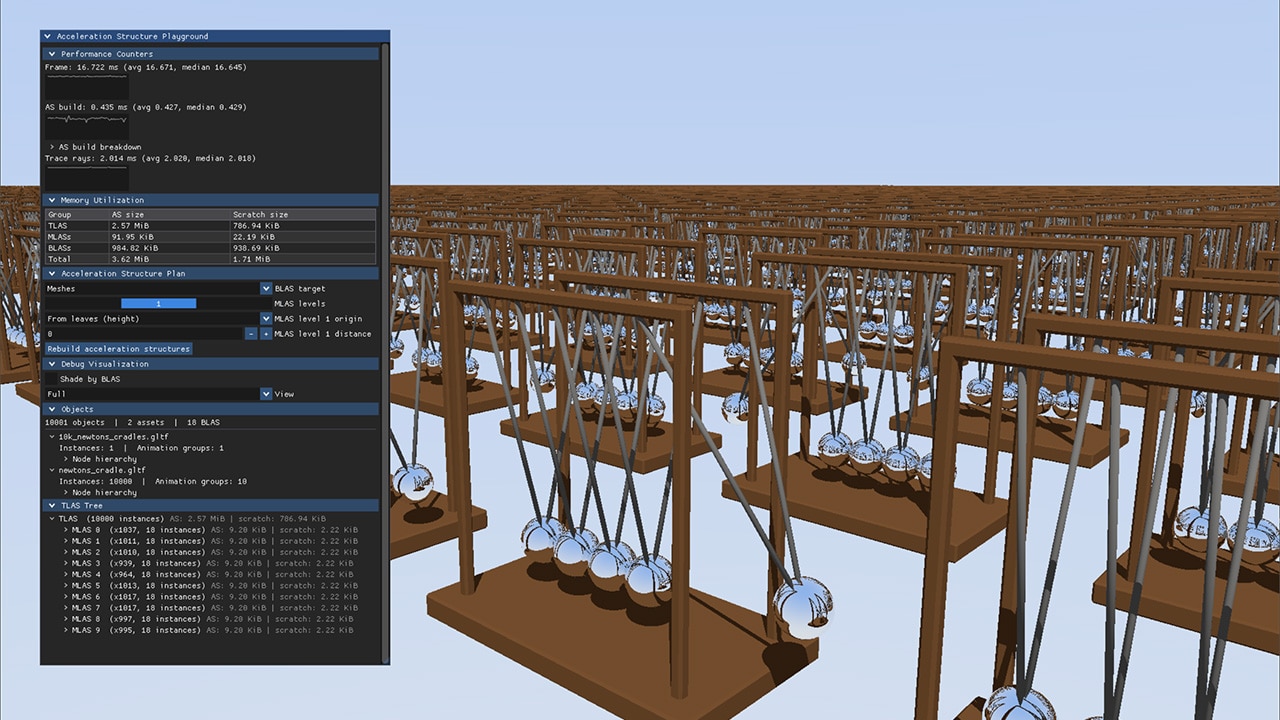
AMD has released RT-MLAS, a provisional Vulkan extension that adds reusable mid-level acceleration structures between BLAS and TLAS. It aims to cut acceleration structure size and rebuild time in large, repetitive or animated scenes.
gpuopen.com17h ago3 min read
Unity previews URP upgrades for Unity 6.7 and Unity 7, releases Atrio sample
At Unite Tokyo, Unity showed upcoming Universal Render Pipeline features planned for Unity 6.7 and Unity 7, including Surface Cache GI, screen space reflections and new upscaler support. A new URP sample project, Atrio, shows the features.
gamefromscratch.com17h ago3 min read