Fenris Creations open-sources CORTAO, a screen-space ambient occlusion technique
Fenris Creations, the studio behind EVE Online, has released CORTAO (Circular Occluder Ray-Traced Ambient Occlusion) as open source through its Carbon engine framework. It is a screen-space AO method that its developer says improves on Ground Truth Ambient Occlusion (GTAO) in accuracy and convergence.
Digital Developer Desk, 21h ago, 3 min read

Fenris Creations has introduced CORTAO (Circular Occluder Ray-Traced Ambient Occlusion) and made it open source through its Carbon engine framework. Original source code and documentation are available, along with a Carbon-optimized version.
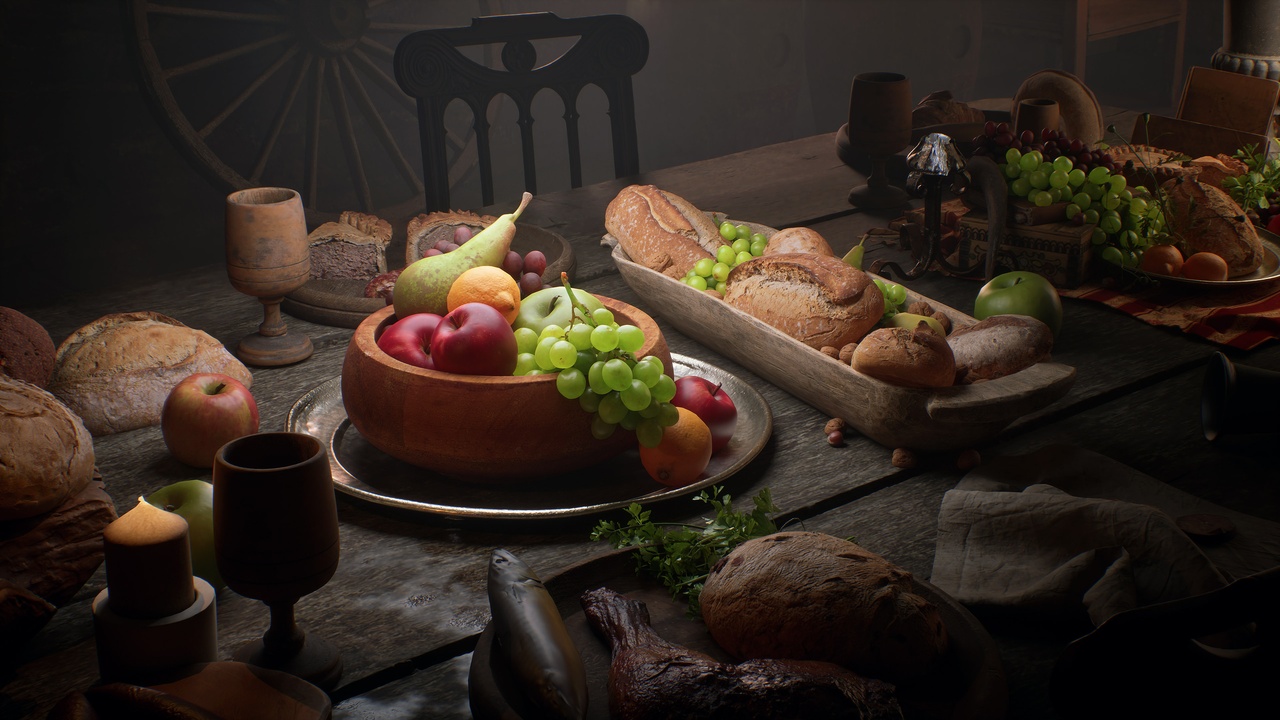
Senior Rendering Engineer Daniel Isheden first developed CORTAO as an independent project. It later became a full production tool with the studio's support. The team has used it in EVE Frontier, an upcoming space survival MMO, across open space, large-scale battles, megastructures and enclosed interiors.
The technique takes a different approach to screen-space ambient occlusion. It uses what is currently visible on screen to represent nearby surfaces as circular occluders, then calculates how they block ambient light. It runs in real time and needs no baked scene data, which suits environments that players build and reshape. Testing reportedly shows better visual accuracy at low rendering cost, especially in visually complex scenes.
Isheden compares CORTAO with GTAO, which is the current state of the art. He says CORTAO reaches a level of physical accuracy rivaling brute-force hardware ray tracing while relying only on screen-space information. He also says it treats depth discontinuities more conservatively, avoiding the view-dependent occlusion of GTAO and producing less obvious artifacts when screen-space information is limited.
He adds that CORTAO converges much better, giving higher-quality results at lower sample counts even in scenes where GTAO works well. He describes this as especially important for low-end hardware. Visual comparisons and performance benchmarks are on a separate page linked from the original report. According to the report, no AI was involved in developing CORTAO.
Sources
Get the daily brief
The five stories that matter, every weekday morning. Free.
Godot FPS Balitti uses radial gravity in a hollow spherical world
Developer sembask explained how the upcoming manga-style FPS Balitti, built in Godot, pulls players toward the inside of a hollow sphere. The setup uses an Area3D with negative point gravity and per-player body alignment.
80.lv6h ago2 min read

Artist details modular material pipeline behind a UE5 Baldur's Gate 3-inspired temple
Material artist Mandar Warde has described how he built Shar Temple, an Unreal Engine environment inspired by Baldur's Gate 3, as a material system of trims, tileables and decals. The breakdown covers texel density, a three-pass material schedule and layered floor materials.
80.lv1d ago3 min read

Quixel makes full Megascans library on Fab free again, with refunds
Quixel announced that the entire Megascans catalogue on Fab is going free again, with listing updates due to finish on 12 November. Purchases made since 1 January 2025 are to be refunded as Epic Account Balance credit by the end of 2026.
digitalproduction.com2d ago3 min read